Who is Big Brother?
Emory Fierlinger 31st May 2019
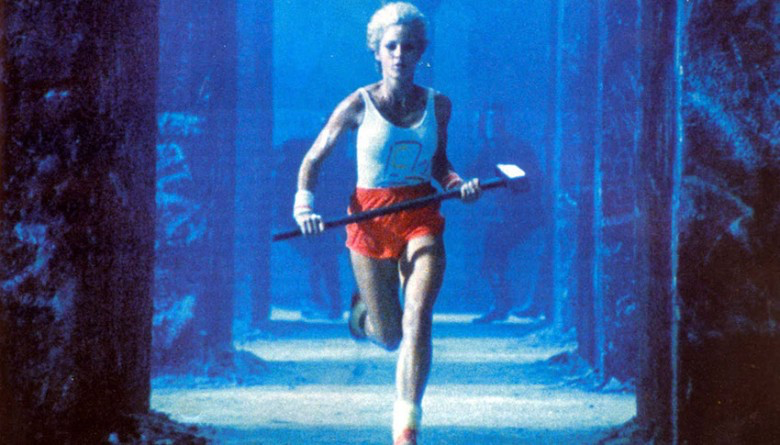
Apple made a famous ad in which a woman dressed in white runs through a crowd of slave-looking people, throws a big hammer, and destroys a large TV broadcasting an image of a giant man’s face who states ‘we shall prevail’ before he’s cut off by the woman's hammer. Apple’s tagline behind the ad was “On january 24th, Apple computer will unveil the Macintosh, and you’ll see why 1984 won't be like 1984”
This ad ran at the halftime show of the super bowl, and is widely regarded as being one of the most famous ads of all time. For a long time I wondered what that ad meant. What does everyone else think 1984 means? Who is that man on the screen? Why is this girl dressed as a macintosh destroying this man?
I guess I was just too young. Talking to my parents, they knew what 1984 meant – it was the title of one of the world's most famous books. Written by George Orwell in 1949, the novel is set in an imagined future, the year 1984, when much of the world has fallen victim to perpetual war, omnipresent government surveillance and propaganda. Orwell imagines a world where people are stripped of their individuality, ruled solely by one political party Oceania and led by ‘Big Brother.
The premise behind Apple’s ad was to show that – without Apple – the world would become like George Orwell’s novel. Apple’s big competition at the time was IBM, who was known as having very corporate, suit wearing culture. It’s in the name: International Business Machines. Apple was trying to make computers for the average person, not just businesses.
The way they decided to portray that was to paint IBM as big brother – the figure on screen as the woman runs in and destroys the broadcast. That woman has a Macintosh drawn on her outfit, sports orange shorts and looks entirely different to the drab, bald-headed people wearing grey. The tagline “you’ll see why 1984 won’t be like 1984” was stating that without Apple’s intervention in the computer industry, IBM would take over the world and we’d one day be living in a future not dissimilar to George Orwell’s 1984.
This really got me thinking. I wonder if Apple hadn’t released the Macintosh in 1984 and made computing so personal, would some of the big issues related to digital privacy, freedom of speech and censorship be around today? Was George Orwell right about the year 1984? Was Apple’s tagline “you’ll see why 1984 won’t be like 1984” actually foreshadowing the world we live in today. I think the year 1984 was actually Big Brother’s birthday – thanks to Apple.
Data privacy
Ever heard the name Cambridge Analytica thrown around before? They’re a company who you might have heard of in the same sentence as Facebook, the Trump election and Brexit. They help political parties win elections by using personal data and creating targeted ads which influence people’s decision making. Their slogan might as well be just that. That’s because they use tactics and data from Facebook to learn about people on Facebook – what they’re watching, where they’re located, what they like, what they dislike, how long they watch a certain video for and much, much more. They use all of that information to create a profile of you that contains more information than you think you might’ve shared.
Have you ever seen those quiz games floating around your facebook profile where you answer questions to find out some crazy truth about yourself? Like for instance, which Teenage Mutant Ninja Turtle are you? Well that’s exactly how Cambridge Analytica took information from you – even if you’ve never taken one of those surveys. Because of a loophole in one of Facebook's systems at the time, they were able to get that personal information about anyone who took the survey, and their friends. Most likely, you’re friends with someone who’s taken one of those surveys, which means your data was stolen too.
Facebook creates what’s known as a ‘shadow profile’ of you – which are profiles that contain data that you haven’t publicly shared to your facebook page. You’ve never made a Facebook post saying “I watched this video about Trump for 34 seconds, and after the word ‘guns’ came up, I stopped watching” – but your shadow profile knows all of that information about you, on every video you watch, every photo you look at, and every post you read. One of the scariest parts of that is that it means they can tap into your fears and your motivations to target extremely specific advertising to you. This data is yours, but you aren’t able to access the hidden information that Facebook knows about you in your shadow profile. Say for instance, about Trump and gun laws.
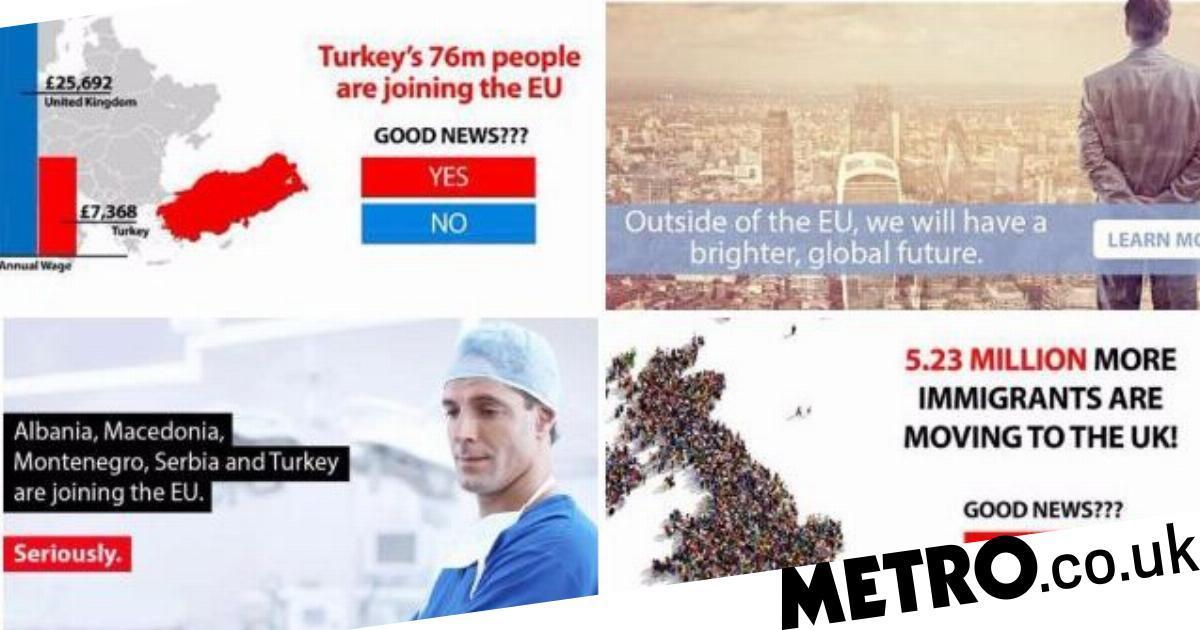
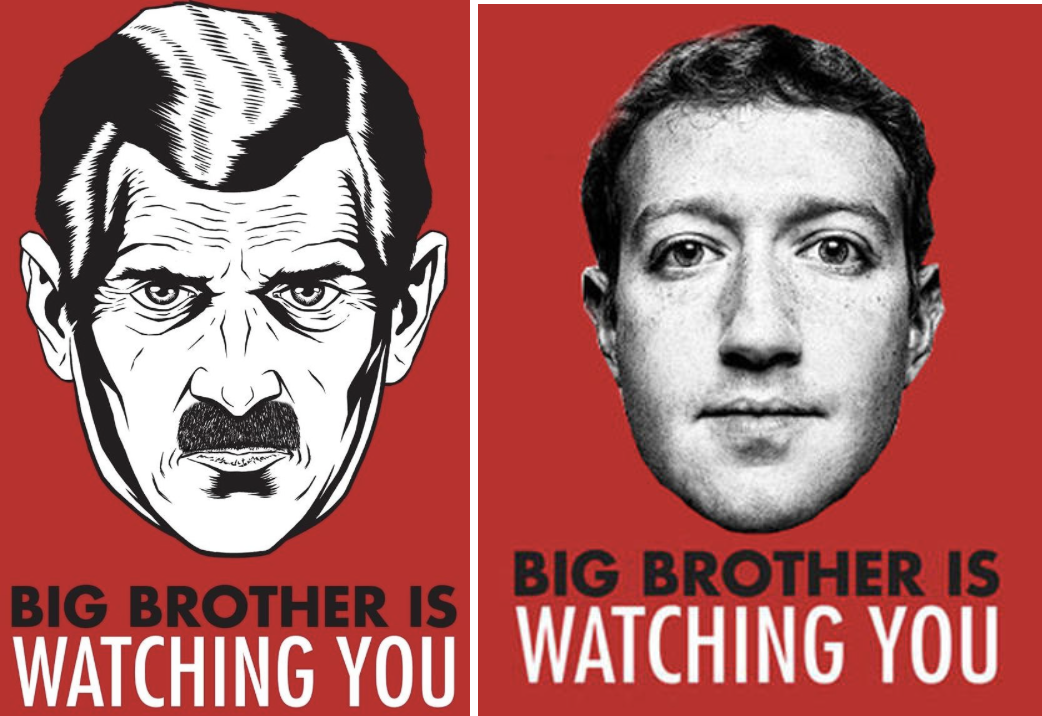
The fucked up part is this: Cambridge Analytica wasn’t using real facts in their advertising, but they created entirely fake advertisements, and government candidates could even pay them enough to create fake businesses on Facebook. This data is yours, but you aren’t able to access the hidden information that Facebook knows about you in your shadow profile and no matter how many governments ask, Facebook won’t give up that data. If that might remind you of the catchphrase “Big brother is watching you” that’s because he is – but not literally. Facebook doesn’t need to watch you or listen to you because they have so much more information about you based on what you’re looking at on your device.
If you're interested in learning more about Cambridge Analytica and it's horrible tactics to manipulate the public, I found this hidden camera video that channel 4 News released in the UK which set up a fake meeting with the CA boss pretending to be a country interested in working with CA.
Free speech vs Hate speech.
One of George Orwell’s big points about Big Brother was about the “combined collective ideas” and that the government would enforce what can and cannot be said by individuals, obviously playing at the notion that freedom of speech – one of America's founding rules – would be abandoned entirely.
This same topic has come up a lot in the news recently, related to the ideas around free speech vs hate speech, and where the line is drawn. A great example of this is Alex Jones, who has been described by the New York Times as America’s leading conspiracy theorist. Jones runs a website called Infowars which has been widely know to be linked with far-right ideologies, conspiracy theory, spreading mass misinformation and hate speech towards Muslims.
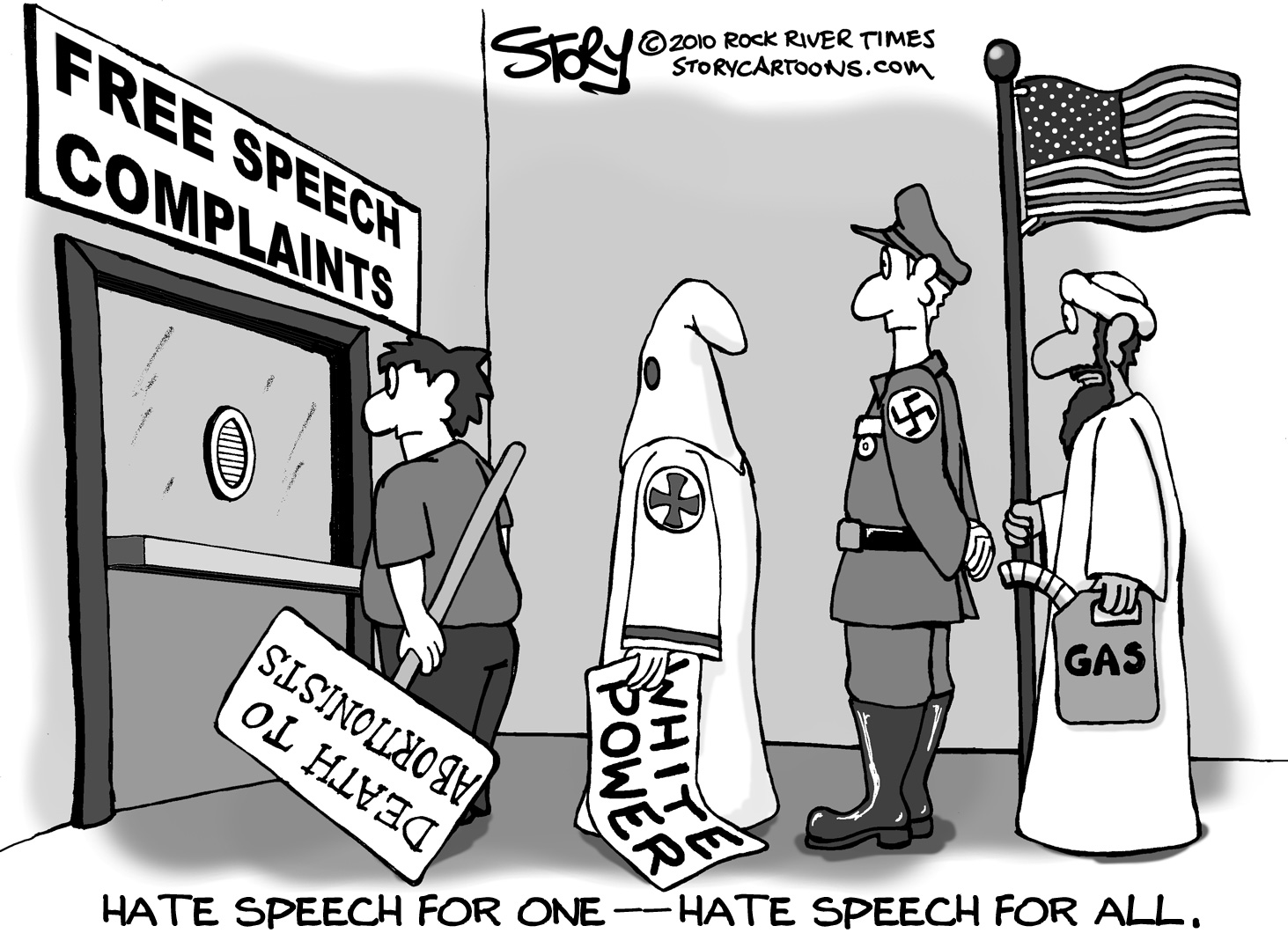
In September of 2017, Alex Jones was banned from Twitter, and a day later, his app was removed from the Apple App Store, and his podcast shows removed from Apple podcasts. In a statement, an Apple PR spokesperson said “Apple does not tolerate hate speech, and we have clear guidelines that creators and developers must follow to ensure we provide a safe environment for all of our users” Apple confirmed the removal with Buzzfeed by citing the App Store guidelines, which forbids “content that is offensive, insensitive, upsetting, intended to disgust, or in exceptionally poor taste.”
In a great youtube video by journalist Rene Ritchie he analyses the situation regarding Alex Jones: "Reaction has been mixed, on one end you have people still extremely upset that it took so long for the shows to get removed in the first place. On the other, you have people who believe it sets a dangerous precedent that could inevitably be used to restrict ideas on the world's biggest platforms" – sounds a lot like big brother, no? So this is what we’re up against.
He also makes the comparison of free speech and platform moderation to porn which I think is a brilliant example. He highlights that there are lines between art and nudity, and how female nipples are blocked from certain platforms, but male nipples aren’t. In a way, this is content providers like Apple and Instagram suppressing freedom of publication, directly related to freedom of speech. The difference being, we’re all just one that we’re more used to at this point.
Rene makes another great point in his rebuttal of this being a freedom of speech issue. He makes yet another comparison, this time to news publications: “Facebook, Google and Apple aren’t countries or governments, they’re companies” Rene says “that means, as much as it makes me personally heartbroken that NPR is under no obligation to air my dog bark theatre.” He’s making the point that this isn’t a freedom of speech issue because publications and organisations have always had the right at their discretion to have their own content policies and or censor their own platforms. It’s the difference between being allowed to say whatever you like out loud, and someone letting you use their megaphone, they’re not blocking your freedom of speech, they’re just not amplifying it.
The issue is when these companies become so big and have a monopolistic businesses that there isn’t any alternate options, that one could argue it becomes a true issue of freedom of speech. For example, if every browser in the world blocked Alex Jones’ website, and there was no possible way for anyone to visit his site, would that be a breach of freedom of speech? Is freedom of speech only related to directly speaking about something out loud, or does it also mean everyone has the right to access these companies platforms? This all ties in very nicely to the question I’m asking: Who is big brother? Are we at a point now where these companies have more ability to suppress ideas than governments do? I would argue that yes, they do.
So what’s the issue then? If we know freedom of speech is that you’re allowed to say what you want, but by no means does anyone have to provide you with a pedestal – what is the issue? I see two things.
A commenter on rene’s video brings up what I think is a great rebuttal “Another issue is the non-transparency of the content policies. What, explicitly, constitutes "hate speech"? I can find "hate speech" in religious media. Should religious podcasts be removed?” I think this is a great point that should be addressed by the companies putting out these policies. At what point does something cross the line from being hate speech, and should these companies be allowed to make those decisions? Ultimately, someone in the world does make these decisions, whether they’re government bodies or private companies. That’s not to say that I believe Apple or Facebook is pushing some sort of agenda like big brother would, but it does become a slippery slope.
Thought control
In the book 1984, the police of the Oceania dictatorship are called Thinkpol – instead of punishing people based on their actions, the highest offence one can commit is that of Thought Crime. The way that the Thinkpol (often referred to as thought police) operated was by audio visual surveillance and creating profiles based on offensive thoughts. Imagine surveillance cameras on every street block, in every home, analysing your body language, tone of voice, eye movements, and being able to determine your thoughts and intentions – which in 1984 was punishable. With that data they could gather from the surveillance cameras, they created a offender profile, which included all of your malicious thoughts which could have you seen be put in jail.
In 1984 there was a strong sense that it was hard to trust anyone – with Oceania always watching you making sure you didn't do anything wrong you never knew anyone’s intent. Could they be a spy? Are they telling the truth?
What’s the worst that could happen?

So if those are some of the big ideas behind big brother, what’s the big deal? A lot of people take the stance of data privacy that “I’ve got nothing to hide, so privacy isn’t a big deal to me” – I wonder if this same stance would apply in the situation of the police searching your house, looking through all of your drawers, your photo books, memories, precious relics and heirlooms. The reality for a lot of people is that you’ve now got more precious and private content on your phone than in your home. Are you comfortable sharing your camera roll with one of your friends, let alone the government or private companies? Or should I say Oceania...
As far as fake news goes, there’s obvious risks. As I mentioned, it becomes really hard to trust anything or anyone as there becomes more and more technologies used to create better and more convincing fake news – like deep fakes or writing generators, or in a recent case with even just a slowed down video clip (which facebook declined to remove from their platform.) There is becoming a sense of awareness of trust in society these days as the words fake news get spread further and further into mainstream media. A lot of peers I spoke with said that they often don’t listen to the news because “one day I’ll hear something is true, and then find out it was actually fake.” That’s detrimental to society and reminds me again of the orwellian future we seem to be manifesting. What happens to the world when we can no longer trust those around us? When we have to ask where those facts came from. Undoubtedly the internet and consumer technology has done immense good for the world – but as technology like Machine Learning and AI become better and better, there’s a huge risk that we lean into a future not dissimilar to 1984.
Here’s the super scary part: You know that surveillance and risk profiling stuff I mentioned, about how the thought police was monitoring your every move with cameras and creating a risk profile for you based on your real life movements day to day? Yeah, well in China that’s not too far off. China has literally been developing the technology to do this for years now, as part of what they call a “citizen score” which “rewards good behaviour” uh huh… Haven’t I read about this in some book? An amazing article by the atlantic breaks down what this means extremely well. In their article, they mention that it’s not just digital tracking as you might think: “When you step outside your door, your actions in the physical world are also swept into the dragnet: The government gathers an enormous collection of information through the video cameras placed on your street and all over your city. If you commit a crime—or simply jaywalk—facial recognition algorithms will match video footage of your face to your photo in a national ID database. It won’t be long before the police show up at your door.”
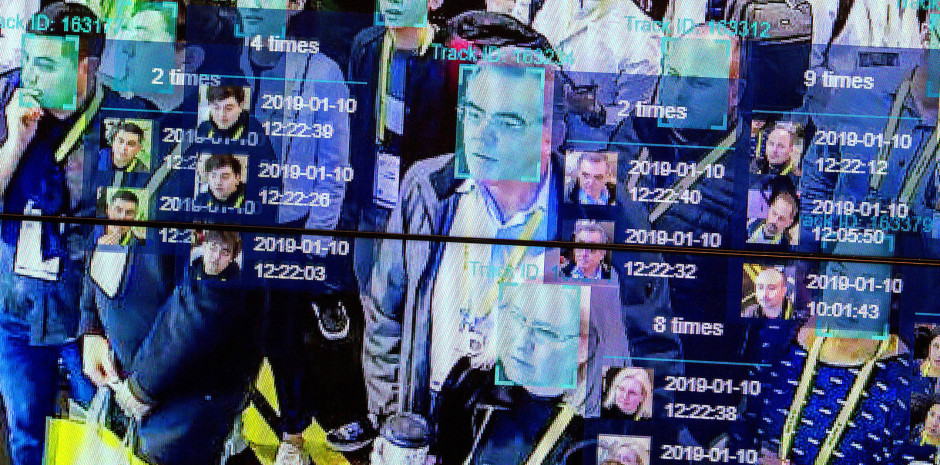
The whole citizen score thing reminded me of a TV episode I watched in a series called Black Mirror titled “Nosedive” in which society is based on ratings – like the one you give your Uber driver, except for everyone. She made one small mistake one day, and after her rating dropped below a certain threshold she was no longer allowed to take public transport, get a loan for a house or anything you might otherwise do as a normal member of society.

One quote from 1984 summises my verdict perfectly. “For, after all, how do we know that two and two make four? Or that the force of gravity works? Or that the past is unchangeable? If both the past and the external world exist only in the mind, and if the mind itself is controllable – what then?” ― George Orwell, 1984. What happens when AI becomes so good that it can tell what you’re thinking, what your true fears are, target fake news stories at you, create a profile about all of that data, and then restrict access to society and alternative ideas based on your real world actions. I’m sorry to say that’s no longer fiction or a bad dream – all of those things I just mentioned are happening right now.
Works Cited
Cam Resu “Thought crime” Wiki.c2.Com March 13, 2009,
“Alex Jones.” Wikipedia, Wikimedia Foundation, 28 May 2019, en.wikipedia.org/wiki/Alex_Jones.
Anna Mitchell, Larry Diamond. “China's Surveillance State Should Scare Everyone.” The Atlantic, Atlantic Media Company, 5 Feb. 2018, www.theatlantic.com/international/archive/2018/02/china-surveillance/552203/.
Cadwalladr, Carole. “The Great British Brexit Robbery: How Our Democracy Was Hijacked.” The Guardian, Guardian News and Media, 7 May 2017, www.theguardian.com/technology/2017/may/07/the-great-british-brexit-robbery-hijacked-democracy.
Etienne, Stefan. “Apple Just Permanently Banned Infowars from the App Store.” The Verge, The Verge, 8 Sept. 2018, www.theverge.com/2018/9/7/17833748/apple-just-permanently-banned-infowars-from-the-app-store.
News, Channel 4. “Cambridge Analytica Uncovered: Secret Filming Reveals Election Tricks.” YouTube, YouTube, 19 Mar. 2018, www.youtube.com/watch?v=mpbeOCKZFfQ.
News, VICE. “Apple CEO Tim Cook: The VICE News Tonight Interview (HBO).” YouTube, YouTube, 2 Oct. 2018, www.youtube.com/watch?time_continue=64&v=VD1cP8SK3Q0.
Perlow, Jason. “Forget the NSA: Orwell's 1984 Is Alive and Well in Private Industry.” ZDNet, ZDNet, 20 Dec. 2013, www.zdnet.com/article/forget-the-nsa-orwells-1984-is-alive-and-well-in-private-industry/.
Ritchie, Rene. “Apple vs. Infowars: Why Alex Jones Got Deleted.” YouTube, YouTube, 7 Aug. 2018, www.youtube.com/watch?v=fSvkDKvKxec&t=421s.
Taube, Aaron. “Apple Changed Super Bowl Advertising Forever 30 Years Ago Today, But Its '1984' Ad Almost Didn't Make It On The Air.” Business Insider Australia, Business Insider Australia, 22 Jan. 2014, www.businessinsider.com.au/apple-super-bowl-retrospective-2014-1?r=US&IR=T.
Vincent, James. “Watch Jordan Peele Use AI to Make Barack Obama Deliver a PSA about Fake News.” The Verge, The Verge, 17 Apr. 2018, www.theverge.com/tldr/2018/4/17/17247334/ai-fake-news-video-barack-obama-jordan-peele-buzzfeed.
Whittaker, Zack, and Zack Whittaker. “Security Lapse Exposed a Chinese Smart City Surveillance System – TechCrunch.” TechCrunch, TechCrunch, 3 May 2019, techcrunch.com/2019/05/03/china-smart-city-exposed/.
“Facebook Releases Brexit Campaign Ads for the Fake News Inquiry – but What's Wrong with Them?”, www.newstatesman.com/politics/media/2018/07/facebook-releases-brexit-campaign-ads-fake-news-inquiry-what-s-wrong-them.